How The Lion Kingdom is redefining Sri Lanka’s cultural stage
Introduction: A New Chapter in Sri Lanka’s Cultural Story
Sri Lanka is a land where history, mythology, music, and ritual have intertwined for thousands of years. From ancient temple murals to traditional dance ceremonies, the island has always expressed its identity through performance and storytelling. Yet despite this rich artistic heritage, Sri Lanka has never had a large-scale grand opera that brings its mythology, history, music, and theatre together on a single monumental stage.
That is about to change.
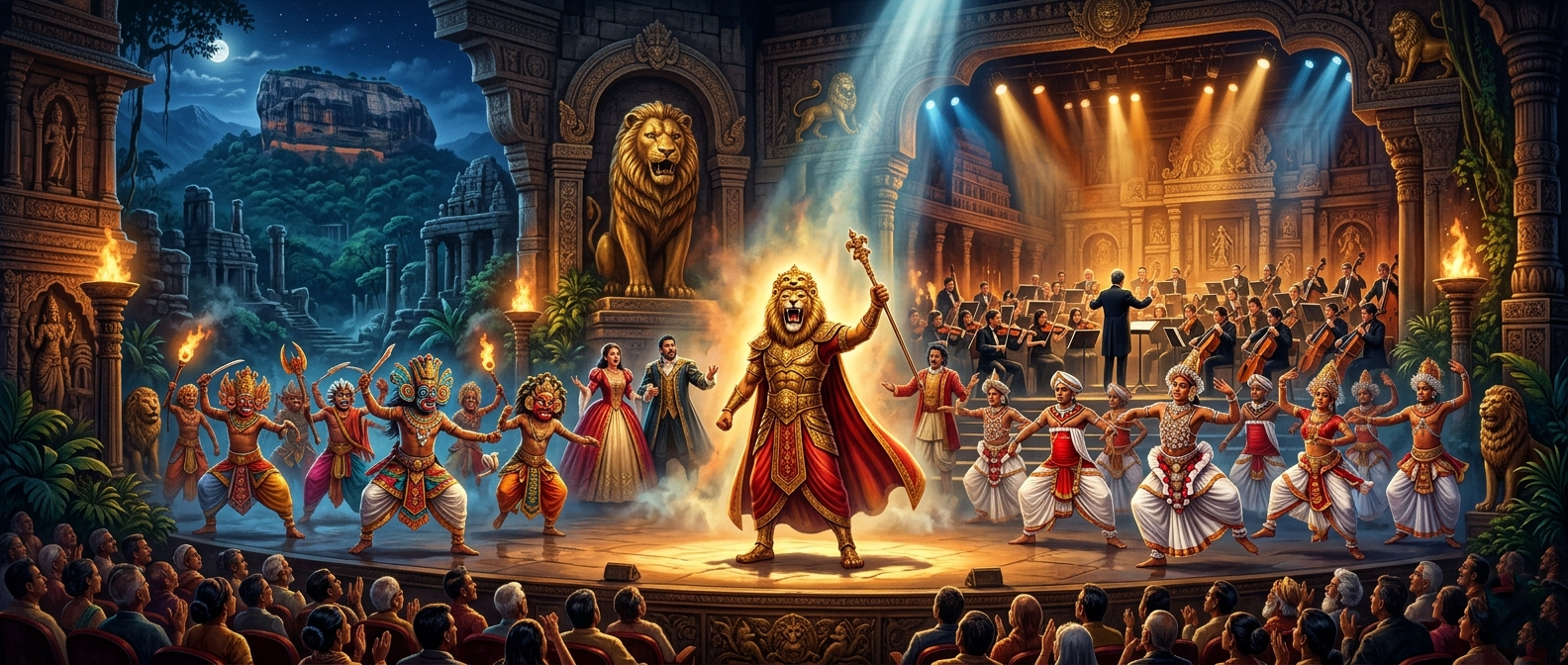
The Lion Kingdom Opera represents the birth of Sri Lanka’s first grand opera production—an ambitious cultural project that merges ancient Sri Lankan mythology, symphonic music, dramatic theatre, traditional dance, and modern stagecraft into a world-class performance. More than just entertainment, it is designed to become a national cultural landmark and a new pillar of Sri Lanka’s creative economy.
The emergence of this production signals something larger than a single performance. It marks a turning point where Sri Lanka begins to translate its cultural legacy into a global artistic language capable of reaching international audiences.
Understanding Grand Opera
To understand the significance of this moment, it is important to understand what grand opera represents.
Grand opera is one of the most complex forms of performing arts ever created. It combines:
- Orchestral music
- Powerful vocal performances
- Theatrical storytelling
- Large-scale stage design
- Dance and choreography
- Visual spectacle
Historically, grand opera became a defining cultural form in Europe during the 18th and 19th centuries. Countries like Italy, France, and Germany developed opera houses that became symbols of national identity and artistic excellence.
These productions often required:
- Large orchestras
- Dozens of performers
- Elaborate sets and costumes
- Advanced stage technology
Because of this scale, opera traditionally represented a nation's cultural ambition and artistic maturity.
Today, grand opera has expanded beyond Europe. Nations across Asia are developing their own operatic traditions to express local culture through global performance languages. The Lion Kingdom is Sri Lanka’s step into this evolving artistic landscape.
Sri Lanka’s Rich Performance Heritage
Although Sri Lanka has never had a formal grand opera tradition, the island possesses deep theatrical and musical roots that naturally lend themselves to operatic storytelling.
Some of the island’s most powerful artistic traditions include:
Traditional Dance Theatre
Sri Lankan dance traditions such as Kandyan dance, low-country ritual dance, and Sabaragamuwa dance combine rhythm, costume, and storytelling. These performances often portray mythological battles, gods, demons, and moral conflicts—elements that align closely with operatic drama.
Mask Traditions
Sri Lanka’s sacred mask traditions transform performers into symbolic beings:
- Demons
- Animals
- Gods
- Mythic heroes
Masks are not simply decorative; they embody psychological and spiritual archetypes. On a modern stage, these visual traditions create powerful theatrical imagery.
Temple Ritual Performance
Ancient ritual performances, especially healing ceremonies, involve music, chanting, dance, and dramatic storytelling. These traditions demonstrate that Sri Lankan culture has always used performance to communicate complex spiritual and social narratives.
Storytelling Through Chronicle and Myth
Texts such as ancient chronicles and folklore collections contain epic stories filled with kings, queens, wars, miracles, and philosophical dilemmas. These narratives are perfectly suited for large-scale theatrical adaptation.
The Lion Kingdom Opera draws upon these foundations to create a modern form that still remains deeply connected to the island’s cultural DNA.
The Concept Behind The Lion Kingdom
The Lion Kingdom Opera transforms Sri Lanka’s mythological and historical narratives into a unified operatic story.
Rather than focusing on a single historical event, the opera traces a civilizational arc across multiple legendary moments in the island’s past. These moments represent different phases in the development of Sri Lankan identity.
The narrative journey includes stories associated with:
- Ancient mythological kings
- Foundational origin legends
- Early political formation
- Religious transformation
- Architectural and artistic innovation
Each story reveals a different dimension of Sri Lanka’s cultural evolution—power, faith, identity, morality, and imagination.
By weaving these narratives together, The Lion Kingdom becomes more than a historical retelling. It becomes a philosophical reflection on how civilizations are formed.
Transforming Myth into Music
One of the defining features of the opera is its musical fusion.
The Lion Kingdom integrates two distinct musical worlds:
Western Operatic Orchestra
Opera traditionally relies on a full symphonic orchestra. This provides the dramatic emotional landscape of the performance—ranging from quiet reflective passages to thunderous climactic moments.
Sri Lankan Musical Heritage
Alongside orchestral sound, the opera draws inspiration from Sri Lankan melodic traditions and rhythmic patterns. These musical elements reflect the island’s identity and cultural memory.
The result is a musical language that feels both:
- Rooted in Sri Lanka
- Accessible to international audiences
A Visual World of Masks, Movement, and Architecture
Opera is not only about music; it is also a visual experience.
The Lion Kingdom creates an immersive world through:
Stage Architecture
Large-scale sets recreate landscapes inspired by Sri Lanka’s ancient environments, including forests, palaces, and monumental structures.
Costume Design
Costumes are inspired by traditional Sri Lankan art forms, historical clothing, and symbolic colors associated with mythology and ritual.
Masked Performance
Sacred mask traditions bring mythological characters to life. Masks allow performers to embody symbolic beings that represent forces such as:
- Power
- Nature
- Fear
- Wisdom
Choreographed Movement
Movement plays a central role in telling the story. Choreography draws from Sri Lankan dance traditions while adapting them to suit the scale of operatic theatre.
Together, these elements create a spectacle that blends heritage with contemporary stage technology.
Conclusion: The Beginning of The Lion Kingdom
The birth of Sri Lanka’s first grand opera marks a new era for the island’s cultural expression.
Through its integration of mythology, music, dance, and theatrical spectacle, The Lion Kingdom offers something that has never existed before—a performance that captures the imagination of an entire civilization.
It is a celebration of Sri Lanka’s past, a platform for its present artists, and a gateway to its cultural future.
As the curtains rise on The Lion Kingdom, audiences will not simply witness a performance.
They will witness an island remembering its stories—and singing them to the world.
More Information
For partnerships, cultural collaborations, media inquiries, or participation opportunities related to The Lion Kingdom Opera, please contact the organizing team.
Disclaimer ⚠️:
This projects are shared for cultural awareness purposes. The Federation of Film Media Culture Entertainment (FFMCE) is not the organizer, producer, or financial sponsor of this project.